
Industries today are experiencing changes in which speed, flexibility, and efficiency are no longer options, they are now essential. Traditional infrastructure, which is often costly and slow to change and adapt to the growing demand for real-time analysis and distributed operations. ScalerPi presents a fresh view through a combination of edge computing with practical engineering in order to offer solutions that can truly are scalable.
At the heart of this evolution is industrial automation using Raspberry Pi, which enables businesses to reconsider how they develop and manage their systems. Instead of relying on centralized, bulky hardware, companies can now utilize lightweight and powerful devices that operate directly in the place where data is generated. This approach reduces delay and provides teams with the ability to respond immediately to changes in the environment.
Transforming Data into Action at the Edge
The main benefit of edge computing lies in its ability to perform data processing locally. In many industrial settings it’s not feasible to just wait for cloud systems to respond. ScalerPi addresses this by providing the infrastructure to operate on its own but still integrates with larger systems when required.
An essential component of this setup is the industrial Raspberry Pi IOT gateway, which acts as the central connection point between devices and applications. It provides seamless connectivity between sensors, machinery, and software platforms, ensuring that data flows securely and efficiently. It is possible to monitor the operations in real-time, detect problems early and maintain consistency across multiple sites.
For the logistics industry and environmental monitoring, this capability is transformational. This allows systems to work even in remote areas or those with poor connectivity, ensuring that data and operations are accessible.
Compact Power for Demanding Environments
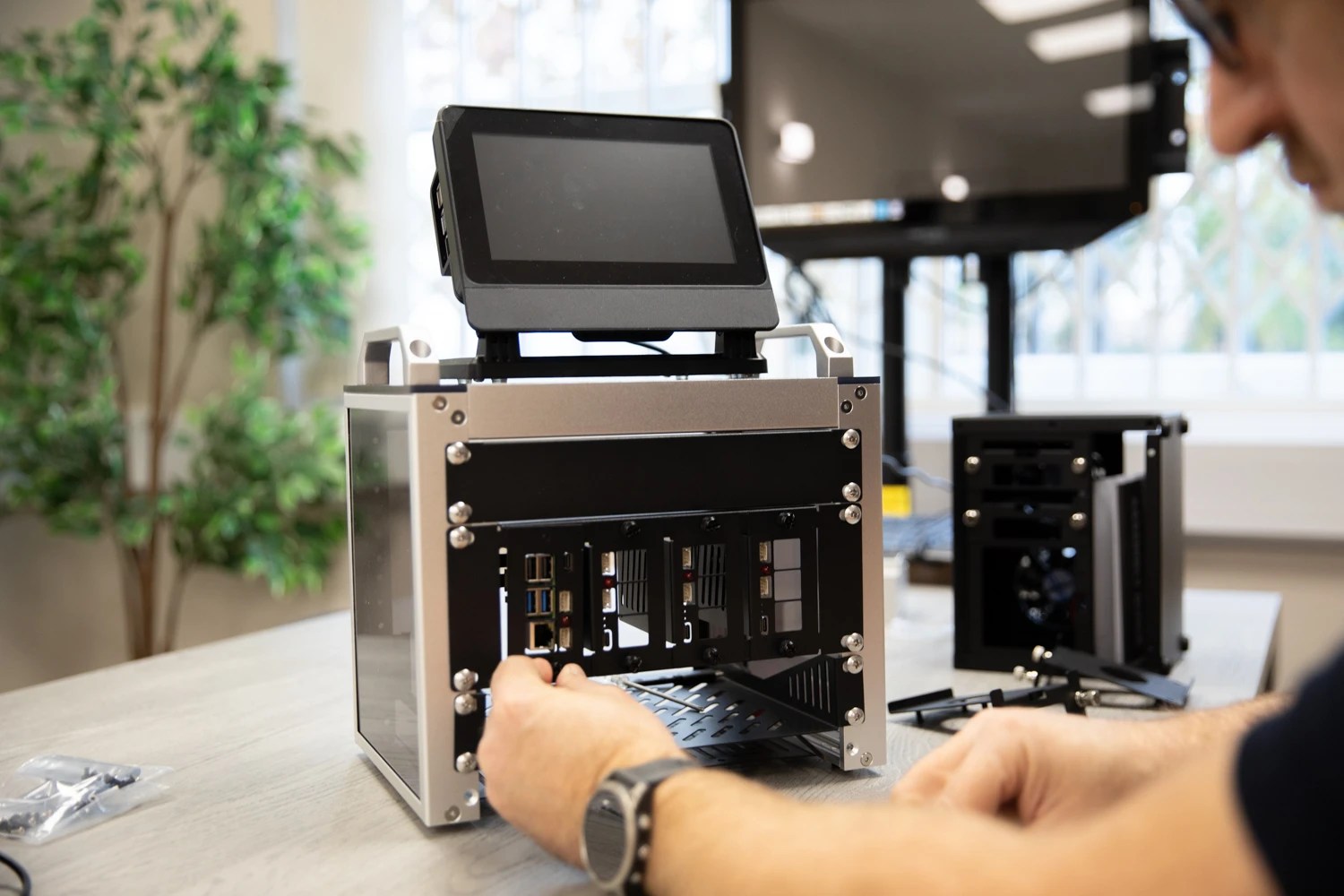
In industrial computing, balancing speed and practicality is one of the toughest tasks. Large servers can provide power, but they often come with high costs as well as energy consumption and restricted flexibility. ScalerPi solves this problem with industrial Raspberry Pi server that provide high-quality computing in a low-energy, compact form.
They are ideally suited for environments with small power and space. They can be utilized in a factory or retail outlet as well as remote monitoring stations. Modularity lets businesses expand their systems slowly, based on their actual needs.
The tiny industrial Raspberry Pi server module offers more versatility. These servers, built for extreme environments, offer robustness and high-end processing capabilities. They are perfect for projects that require continuous operation, like smart city systems or industrial automation setups.
Flexibility Through Containerized deployment
Modern infrastructures have to be able to adapt which is why containerization can be a boon. ScalerPi incorporates Raspberry Pi docker to provide flexible and effective management of applications. With Docker businesses can easily deploy or update applications quickly without disrupting ongoing operations.
This technique simplifies the development process and helps ensure that the application is consistent across deployments. The program can be vetted and then seamlessly transferred into a new environment, minimizing errors and improving reliability. This type of control could be extremely beneficial for companies who manage multiple sites.
Containerization is a great way to foster innovation. Teams can test new services or features without affecting existing systems, making it easier to stay ahead in competitive industries.
Practical Solutions Across Multiple Sectors
ScalerPi is an extremely powerful tool as it is able to adapt to a range of industries. Industrial automation using Raspberry Pi can be utilized to boost productivity and cut production time. Machines can communicate and share information, resulting in a more connected and intelligent production environment.
Edge technology in agriculture supports smarter farming. Sensors track the weather patterns, soil conditions and health of the crop. This helps farmers make educated decisions that boost yields while conserving resources.
The ability to monitor customer behavior in real-time is beneficial to the retail and hospitality industries. From digital signage to queue management, businesses are able to enhance customer experiences while optimizing processes. Public sector initiatives like smart cities depend on cutting-edge technology to perform tasks such as environmental monitoring and asset tracking.
With Confidence, bridge Hardware and Cloud
The ability of ScalerPi to connect physical devices to cloud-based systems is the reason it stands out. It provides a unified platform by combining the expertise of hardware with modern cloud practices.
This ensures that businesses can scale easily and without difficulty. The infrastructure is easily manageable, cost-effective and secure whether you begin with a modest installation, or grow to thousands of devices. Transparent pricing and modular designs make it easier to manage the process. Organizations can focus on innovation, rather than problems with operations.
Industrial Technology: A Future-Ready Methodology
As industries continue to develop and evolve, the need for a reliable and flexible infrastructure will grow. ScalerPi can be a solution which will meet these demands by combining the power of edge computing together with Raspberry Pi technology.
From the industrial Raspberry Pi servers to advanced IoT gateways and containerized applications, every component is designed to be scalable and designed with real-world functionality in the back of our minds. The system is built to not only accommodate the current requirements, but also prepare businesses for future challenges.