
Today, industries are going through a paradigm shift which speed, flexibility and efficiency aren’t just a luxury, they are essential. Traditional infrastructure, typically expensive and slow to evolve, struggles to meet the rising demand for immediate analysis and distributed processes. ScalerPi brings a new view on the subject by combining edge computing and practical engineering. This enables solutions that scale.
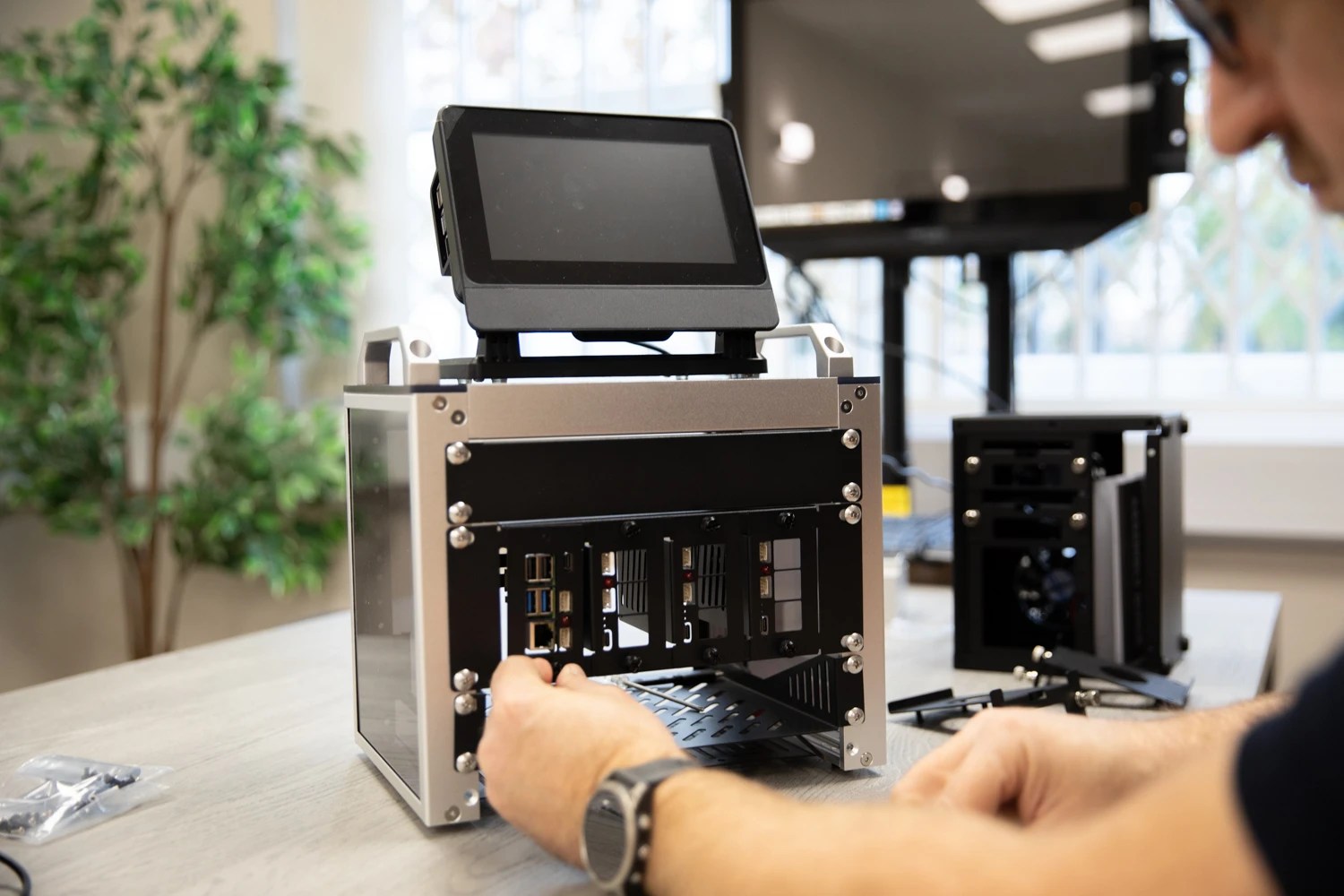
The core of this evolution is industrial automation using Raspberry Pi, which enables organizations to rethink how they build and manage systems. Business can now use lightweight, powerful devices to replace bulky centrally-located hardware. This strategy not only lowers delay but also enables teams to react quickly to changes in the environment.
Data to Action at the Edge
The ability to process data locally is the main benefit of edge computing. In many industrial environments waiting for cloud-based systems isn’t feasible. ScalerPi solves this problem by providing infrastructure that can operate independently, while still being able to connect with larger systems when required.
This configuration would not be complete without the industrial Raspberry Pi IoT gate, which is the central point of communication between the devices and applications. It facilitates seamless communication between sensors, software, and machinery platforms. This allows for continuous monitoring of operations, rapid detection of any issues and consistent performance across different sites.
This ability can be transformative for sectors such as logistics and environmental monitoring. Systems are able to continue operating even in low connectivity or remote zones, making sure that the operation continues continuous and information is available.
Compact Power for Demanding Environments
In industrial computing, balancing speed and practicality is among the toughest challenges. While big servers are extremely powerful however they are costly, have high energy consumption and are not flexible enough. ScalerPi overcomes this with industrial Raspberry Pi servers that deliver reliable computing in a compact, energy-efficient form.
These servers were designed for use in real-world environments in which power and space are very limited. They can be deployed in a manufacturing facility as well as a retail outlet or remote monitoring station, these servers deliver consistent performance, without the need for a complex infrastructure. The modularity of their systems permits gradual expansion, making it possible for businesses to match growth with their current requirements.
The small industrial Raspberry Pi module server takes this idea a step further and gives you more flexibility. The servers are designed to withstand harsh conditions and integrate advanced processing with durability. These servers are best suited to applications that require continuous operation like smart cities or industrial automation systems.
Flexible deployment through containerized delivery
Containerization is an essential element of the modern infrastructure. ScalerPi integrates industrial Raspberry Pi docker environments that allow for the flexibility and efficiency of application management. Docker allows businesses to deploy or scale up applications with no interruption to their regular operations.
This approach simplifies development and ensures consistency across different deployments. The program can be vetted and then seamlessly transferred into a new environment, minimizing errors and increasing the reliability. This degree of control, which is essential for organizations that have multiple locations is extremely valuable.
Containerization can also be a tool for development. Teams can test new options and services without affecting existing systems. This makes it simpler for them to stay in the forefront of their field.
Practical Solutions across multiple sectors
ScalerPi is a powerful instrument since it is adaptable to a variety of industries. Industrial automation with Raspberry Pi is a great way to improve productivity and reduce the amount of time spent in manufacturing. Machines are able to communicate and exchange information, creating an intelligent and a connected production system.
In the agricultural sector, edge-based technology can aid farmers in adopting smarter practices for farming. Sensors are able to monitor the weather conditions, soil conditions and the health of crops, which allows farmers to make educated decisions that improve yields as well as conserve resources.
Real-time insight into customer behavior is advantageous to the hospitality and retail sectors. Companies can improve their processes while improving the customer experience. From digital signage to queue management to digital signage, businesses have the ability to improve the customer experience. In the meantime, projects in the public sector which include smart cities rely on edge infrastructure to perform tasks such as monitoring the environment and tracking of assets.
Bridging Hardware and Cloud with Confidence
The ability of ScalerPi to bridge physical devices to cloud-based systems is the reason it stands out. It creates a single platform by combining hardware expertise and modern cloud practices.
This method allows companies to grow without difficulty. The infrastructure is cost-effective, manageable and secure no matter if you begin with a smaller installation, or grow to thousands of devices. Modular designs and transparent pricing aid in the process. Organizations can focus on innovation, rather than problems with operations.
Industrial Technology for the Future
The need for an efficient and flexible infrastructure will only increase as industries evolve. ScalerPi is a solution which can meet these needs by combining the power of edge computing with the flexibility of Raspberry Pi technology.
Every part that is used, from industrial Raspberry Pi servers to advanced IoT gateways and containerized applications has been designed to provide flexibility and scalability. The system is built to not just support today’s requirements, but prepare businesses for future challenges.