
The month is over. The sales were strong, the P&L is in profit and there’s nothing that appears to be to be terribly incorrect.
Make sure to check the restaurant’s account.
You didn’t get the number you had hoped for.
For restaurant owners, that is a problem because profits and cash available feel as though they should be the same. They don’t. A P&L measures financial performance over a period in time, whereas the bank account is a reflection of the time frame of money going into and out the company.
Knowing the difference could change the way that a proprietor looks at restaurant finances.
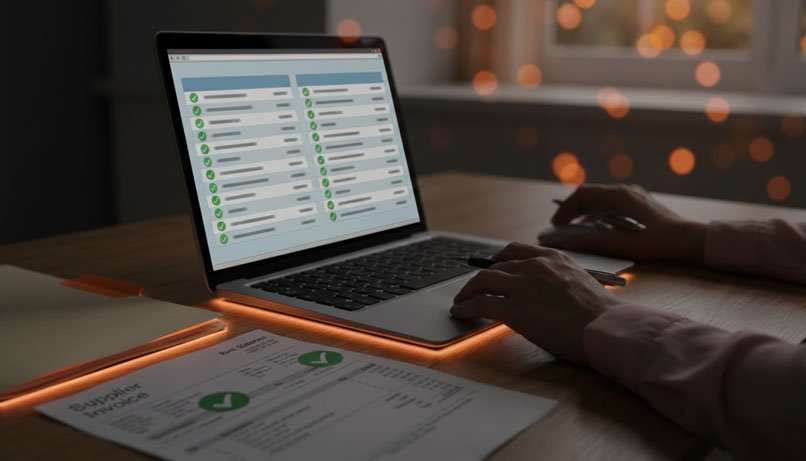
Imagine what might happen during a typical week. Customers pay for food. The payment of employees is essential. Food and drinks deliveries arrive with invoices attached. Rent is on the way. Credit card payments are timed. Sales tax is collected, but it’s also a responsibility.
The purchasing for the coming week has already begun.
Focusing on revenue only or the end-of-year profit number misses much of that activity.
The Key to the Mystery Could Be Hidden in Prime Cost
If the restaurant’s profitability starts to fall, costs of food, beverages and labor expenses should be taken into the equation.
Cost of goods sold combined with labor is the main cost. The Bookkeeping Chef’s guidance puts prices for the prime cost at around 60%-65 percent for most restaurants and emphasizes monitoring on a weekly basis as opposed to waiting until the end of the month.
Effective prime cost management is less about obsessing over a single percentage and more about noticing movement early.
Suppose that normally the restaurant achieves its goals, but this week, it’s more of a percent. Perhaps the overtime rate was increased. Maybe the costs for beverages were stable, but food costs increased. The manager can review menus or waste, portion sizes or vendor invoices, as well as purchasing if the proportion of food is higher.
The percentage raises a question. The answer lies in the activity of the restaurant.
A weekly report makes an opportunity for conversation while everyone is still able to remember what happened.
Three or four weeks later, the details become much harder to decipher.
Then the Vendor Bills Show Up
The restaurant is expected to pay an additional time for the items it purchases. Because of this, it is the case that understanding profits alone does not solve all cash problems.
Vendor invoices must be received and logged. In a highly-competitive business with many suppliers, doing this manually can become the company’s own administrative task.
Automating accounts payable can streamline the process by reducing the time spent on tasks that are repetitive, such as managing invoices and payment information. Owners can have more precise information about the obligations that haven t hit their bank account through integrated bookkeeping systems.
This is useful, because the bank’s balance could appear to be healthier than the restaurant’s actual situation in the near future.
There is currently an amount of $80,000 in the account. The $80,000 amount is little if rent, vendors or payroll take the majority of the next few days.
Cash flow forecasting is a normal outcome.
Instead of asking “How much cash do we have?” the better question is “What will transpire with our cash after the cash we anticipate to receive and the obligations we know about?”
This is a crucial distinction when deciding on the appropriateness of the best time to make an additional purchase, replace equipment, or maintain the liquidity.
A portion of the Cash Was Never Really Yours
The example of sales tax is a good one.
Restaurants receive money from their clients, which they be able to manage in accordance with their tax obligations. If the money is mentally grouped with ordinary operating money, the bank’s balance can give a false idea of what is in the bank to spend.
A consistent record-keeping system helps restaurants to comply with the sales tax laws while also providing an accurate view of their financial position.
This is the reason restaurant accounting is more efficient in situations where financial responsibility isn’t seen as separate entities.
Prime cost affects margin. COGS and future payment are impacted by purchases from vendors. Payroll is a factor that affects both the labor and cash percentage. Cash availability is impacted by sales tax. P&Ls keep track of financial performance and forecasting allows management to take a look ahead.
The pieces connect.
Bookkeeping Chef uses restaurant-focused reporting and system integrations to help bring those pieces together. Specialized outsourced bookkeeping services are an ideal option for owners who don’t have the time to reconcile their financial information. They are able to handle the bulk of the accounting task while removing the proprietor from financial discussions.
It’s the last thing that’s important.
The goal isn’t for restaurant owners to not look at their accounts because someone else handles them. It’s for owners to receive information in a form that helps them understand what’s happening.
When the P&L reports that the restaurant earned money, but the bank account feels extremely unbalanced, don’t think that any of the numbers can be off.
Ask about the events that occurred between them.
This question will reveal more about your business than any number.