
An aging wastewater liftstation is situated in a municipality. The pumps are nearing the end of their life expectancy and the controls are dated as well as the access hatch is deteriorated. Although the concrete wetwell is solid in its structure, it is in need of to be updated.
Do you think the station should be demolished and rebuilt? Not necessarily. It is better to inquire if the system in place can support an advanced system of pumping without compromising future capacity as well as reliability or accessibility.
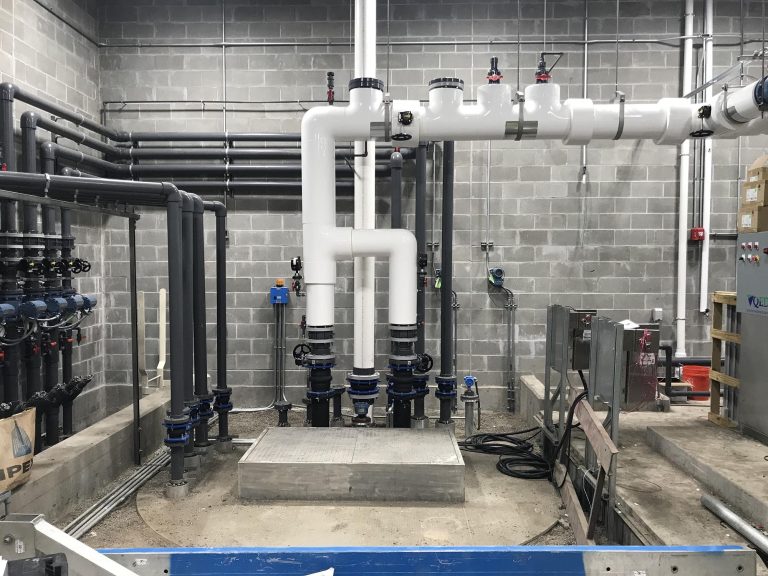
Image credit: romtecutilities.com
A carefully engineered pump station retrofit can preserve valuable infrastructure while replacing components that no longer meet operational requirements.
Begin with the structure that nobody would like to replace.
Wet wells can be the most costly and disruptive component to replace, as they are underground and connected to pipes that are already in place, and crucial to the process of removing wastewater.
If the concrete structure remains in good condition, retaining it could make it easier to dig and build.
However, the deterioration around the hatch could complicate your choice. Romtec Utilities has identified wet-well hatch replacement as an important retrofit. It may be more durable to replace the top layer instead of constructing a new hatch onto deteriorated concrete. This approach can improve access and improve the functionality of the structure without the need to replace the entire wet well.
A Powerful Pump Changes the Engineering
Imagine that a residential area has increased significantly since the original lift station installation. The pumps that are in place may not be sufficient for the increasing flow of wastewater.
The upgrade of a pumping device could include higher-horsepower equipment, but this can’t be accomplished without considering the whole system. The more powerful pumps could require changes to discharge elbows, piping, valves, electrical controls as well as other components.
The engineers should also take into consideration the hydraulic requirements of the system, such as the rate of flow as well as dynamic head total. If you decide to install a larger pump without considering these factors the system could cause operational problems rather than resolve the problem. Planning for future expansion during initial design will help you to grow later on.
Make sure the wastewater is moving during Construction
Retrofitting a wastewater pump station can present an entirely new challenge. In contrast to other replacement projects, this one must continue to operate for the duration of construction.
It is still a problem for wastewater to enter the system even when contractors are in the process of working. Depending on the scope of the project, temporary bypass pumps may be needed to maintain the service throughout the removal and installation of the existing equipment.
Romtec Utilities faced this kind of challenge in the Federal Law Enforcement Training Center located in Brunswick, Georgia.
The project involved replacing two wastewater lift stations that were in use in the meantime, and maintaining the operation of the facility. Specific engineering for the site as well as packaged systems and bypass pumping techniques made it possible to meet existing station footprints and operational needs. This example demonstrates why the sequence of construction is important to consider prior to installation.
When replacement is the better alternative, then replacement is the best
Not all stations are suitable to be renovated. A badly degraded wet-well, inadequate structural capacity, or significant changes in the hydraulic requirements can make the replacement of a sewer lift station more suitable than altering the existing system.
The selection should consider the condition of the structure, compatibility with equipment access to construction to the site, service continuity, and long-term operational requirements. Romtec Utilities begins retrofit and replacement projects by determining which elements will remain and which need to be replaced.
The company will create specific engineering plans for the site along with budget estimates and initial designs. Prefabricated components help make installation easier and less time-consuming, as well as reduce on-site construction.
The Project Isn’t Finished When the Pumps Are Running
A modernized lift station must work as a complete system. Prior to returning the lift station to service, testing the startup and commissioning can help to ensure that the pumps, control equipment and other components are operating in accordance with the established specifications.
Operator training, as well as operation and maintenance manuals are equally crucial. Prior to taking over the responsibility of the station, personnel responsible for maintenance should be familiar with the latest equipment, procedures and also the documents.
Retrofitting infrastructure is a great way to preserve its value while solving the shortcomings that led to modernization.
Municipalities and facilities owners need to think beyond repairs that are immediate. The most effective project is one that integrates the new equipment into existing structures, keeps up with essential services throughout construction, and then prepares the pumping system to last for years of continued operation.